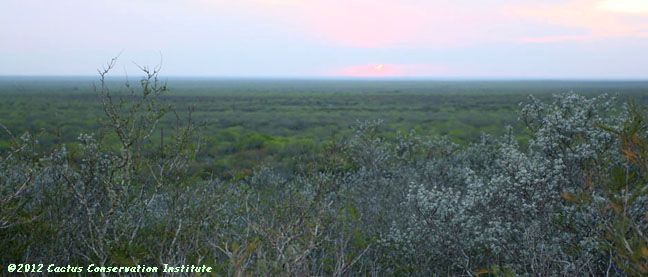
 The home of the regrowth study population.
• In March
2012, the field work for our four-year study on the effects of
harvesting on regrowth
and mortality of peyote in habitat in South Texas was completed. [A
preliminary report following the two-year point was published in 2011.
Our conclusions were published in
2012.] • We
designed studies on the cultivation of peyote in habitat and in the
greenhouse. • We provided technical assistance to the NAC concerning the
greenhouse cultivation of sacrament that will be suitable
for their needs. Interest in and responses to that material have
been encouraging and overwhelmingly positive. • We
provided pro bono
regulatory consulting services to a Native American Church group as
they applied to the DEA for guidelines that would allow them to
cultivate their sacrament in the greenhouse.
• We acquired
a reference sample of pellotine through the generosity of Vlastimil
Habermann. •
This has been a time of broadening communications and increasing
visibility for the CCI. This website has attracted many inquiries, and
we have been interviewed for articles in the popular press – including
stories in Reuters
(December of 2007) and the Time
website – and for radio programs on NPR.
See our links page for more stories.
|
 by Dana M. Price & Martin Terry |
 by Martin Terry |

by Martin Terry
|
 by Joselyn Fenstermacher |
All images © are copyrighted by the photographers and/or the CCI and are used with permission.
Reproduction is forbidden without prior written consent.
|
|
|
|
|
|
|
|
|
|
|
|